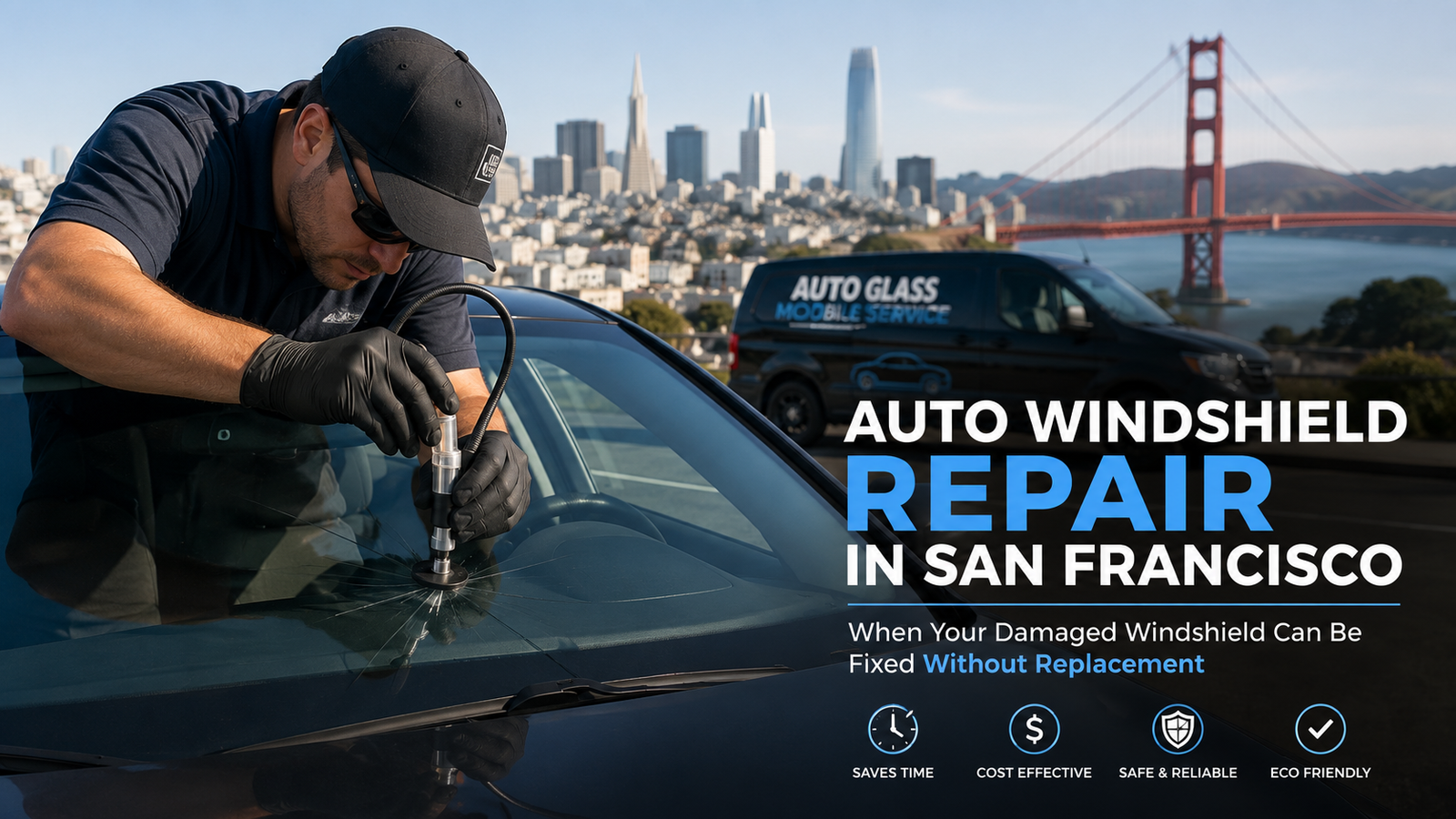
Every San Francisco driver who has heard the sudden crack of a rock striking their windshield on Interstate 280 or Highway 101 knows the moment of uncertainty that follows: is this damage fixable, or does the windshield need to be replaced? The answer depends on a specific set of factors the size, type, depth, and location of the damage and getting an accurate assessment quickly matters, because damage that is repairable today may progress beyond repair if left unattended. This guide explains how Auto Windshield Repair San Francisco works, when it is appropriate, and why prompt attention to chips and cracks is one of the most practical decisions a San Francisco driver can make.
How Windshield Repair Works
Windshield repair is a process of injecting a specially formulated liquid resin into a chip or crack in the outer layer of the windshield’s laminated glass. The resin which has optical properties similar to the glass itself fills the void created by the damage, bonds the surrounding glass fragments back together, and cures under UV light to a hard, clear finish. When performed correctly on suitable damage, the repair restores the structural integrity of the glass at the damage site and prevents the damage from spreading.
The repair process begins with cleaning the damage removing any moisture, dirt, or debris from the chip or crack that would interfere with resin adhesion. The technician then attaches an injection tool over the damage point and uses vacuum and pressure to draw out air and moisture from the damaged area while injecting the resin. The resin flows into all the micro-fractures and voids within the damage. After injection, the resin is cured under UV light, which causes it to harden to a firm, stable state. The surface is then polished smooth.
The best repairs are largely invisible in normal driving conditions, though a close inspection may reveal slight optical variation at the repair site. This is particularly relevant for damage in the driver’s direct line of sight even a well-executed repair may leave some minor visual effect, which is why repairs in the driver’s line of sight are sometimes not recommended even when the damage size would technically allow repair.
When Windshield Repair Is Appropriate
Industry guidelines and the practical capabilities of repair resin determine which types of damage are repairable. The general standard is that chips smaller than a quarter in diameter (approximately one inch) and cracks shorter than about three inches can typically be repaired. Damage larger than these thresholds, or damage that penetrates through both layers of the laminated glass, typically requires replacement.
Chip type matters as well as size. Bullseye chips circular impacts with a clear center point and star breaks chips with radiating arms from the impact center are generally good repair candidates when within size limits. Edge cracks cracks that originate at or reach the edge of the windshield are typically not repairable even when short, because edge cracks can quickly propagate across the full width of the glass and because they weaken the glass-to-frame bond that gives the windshield its structural role.
Location on the windshield is a critical factor. Damage in the driver’s critical viewing area directly in the sightline through the steering wheel may not be appropriate for repair even when the size would allow it, because any optical effect from the repair could be distracting. Some states specifically prohibit repairs in the driver’s direct sightline. In California, the standard is that the driver’s vision must not be impaired, and damage (or a repair) directly in the sightline that creates visual distortion warrants replacement.
Depth of penetration is the final determinant. Windshield glass is a laminated structure two layers of glass bonded together by a polyvinyl butyral (PVB) interlayer. Damage that penetrates only the outer layer of glass is typically repairable. Damage that penetrates through both glass layers or significantly disrupts the PVB interlayer requires replacement. A qualified technician probes the damage to assess depth before recommending repair or replacement.
Why Prompt Repair Matters in San Francisco’s Climate
San Francisco’s characteristic temperature patterns create a particular urgency around prompt chip repair. The city’s bay influence produces cool mornings often in the upper 50s or low 60s that transition to warmer afternoon temperatures, sometimes reaching the 70s. This daily temperature cycling creates thermal stress in existing chips and cracks. As the glass expands with afternoon warmth and contracts with morning cool, existing damage propagates. A chip that is repairable on Monday morning may have spread into an unrepairable crack by Wednesday afternoon.
The city’s fog and occasional rain events introduce moisture into existing chips. Water infiltration into a chip accelerates crack propagation and, if the moisture is present when temperatures drop at night, can freeze and expand the crack. While San Francisco rarely sees freezing temperatures, the cool overnight conditions in the foggy western neighborhoods and Sunset District can push surface temperatures toward conditions where existing moisture expands.
From a practical standpoint, repair is substantially less time-consuming than replacement most repair jobs are completed in 30 minutes or less. For busy San Francisco professionals, a 30-minute repair performed at their office parking spot by a mobile technician is far less disruptive than a 90-minute replacement. Acting quickly when damage occurs keeps that option available.
Insurance Coverage for Windshield Repair in California
California auto insurance policies with comprehensive coverage generally cover windshield repair as part of that coverage. Importantly, many California insurers waive the comprehensive deductible for windshield chip repairs providing free or very low-cost repair when the damage qualifies. This is a meaningful incentive for San Francisco drivers to address chips promptly: the repair may cost nothing out of pocket, while delay that turns the chip into a crack requiring replacement will trigger the full comprehensive deductible.
Contact your insurer directly or ask your auto glass technician to confirm coverage before service. Reputable auto glass services in San Francisco work directly with insurance companies and can handle the claims paperwork on your behalf, simplifying the process.
Frequently Asked Questions About Windshield Repair in San Francisco
How do I know if my chip can be repaired or needs replacement? The general guidelines are: chips smaller than a quarter in diameter and cracks shorter than about three inches are candidates for repair. Damage in the driver’s direct sightline, damage at the windshield edge, and damage that penetrates through both glass layers typically requires replacement. A qualified technician can assess the specific damage and give a definitive recommendation.
Can windshield repairs fail after they are done? Quality resin repairs are highly reliable, though there is a small probability of failure typically quoted at under one percent by professional services. If a repaired chip subsequently spreads into a crack, most reputable San Francisco auto glass services will apply the repair cost toward a full replacement as credit.
Can I repair a windshield chip myself with a DIY kit? DIY repair kits are available at auto parts stores and can provide temporary improvement, but they typically use lower-quality resins than professional repair equipment and often result in optically inferior outcomes. In some cases, a poorly executed DIY repair can make subsequent professional repair more difficult. For damage you want fixed correctly, professional service is strongly recommended.