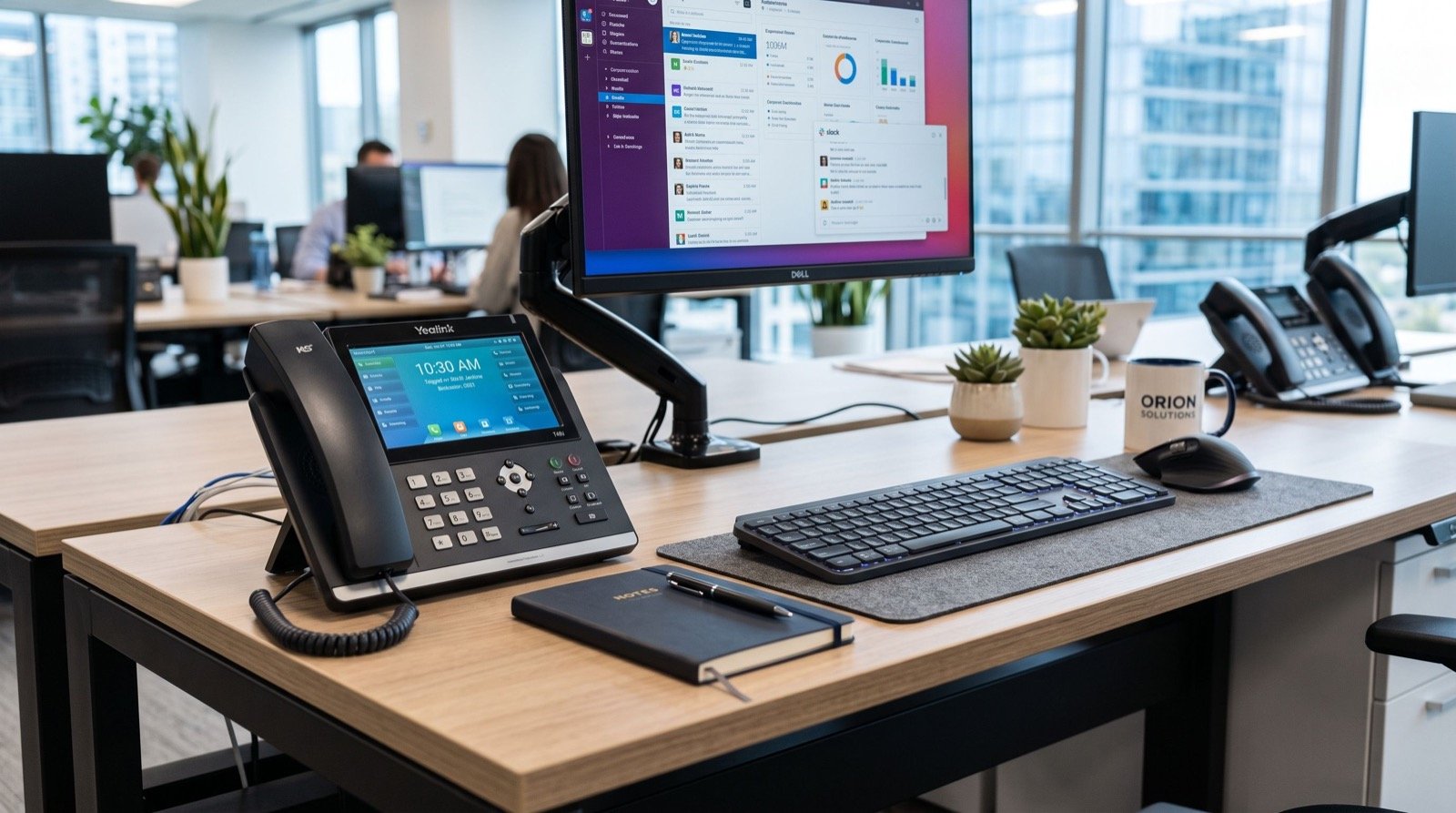
Deploying Fanvil IP phones in Karachi has become a defining step for offices that want crystal-clear voice, built-in video and a single device that ties every meeting together in 2026. As hybrid work settles in and teams juggle on-site and remote colleagues, the humble desk phone has evolved into a smart communications hub. This guide breaks down what a modern SIP video phone actually does, how to choose one for a Karachi workplace, and how to get flawless calls over local networks.
We have rolled out unified communications across offices from I.I. Chundrigar Road to the Korangi industrial belt, so the notes below come from real deployments — bandwidth planning, video codecs and the small ergonomic details staff notice daily. To see what current hardware offers, explore the range of fanvil ip phones in Karachi before you standardise your fleet.
Why Fanvil IP phones in Karachi suit hybrid teams
A smart video phone collapses several devices into one. Instead of a separate handset, webcam and conferencing gadget, staff get a single screen that handles voice, video calls and even simple app integrations. That consolidation cuts clutter and support headaches.
For Karachi businesses that meet clients across cities and time zones, video on the desk removes friction. Colleagues join calls with one tap, share presence status, and keep conversations flowing without booking a meeting room.
The features that change daily work
- Built-in video: Face-to-face calls without a laptop or external camera.
- Large touch display: Visual call handling, directories and quick transfers.
- Unified presence: See who is available before you dial.
- App flexibility: Android-based models run useful business apps on the device.
Choosing the right smart video phone
Not every desk needs video, so plan your fleet in layers. Executives, meeting rooms and client-facing staff benefit most from a flagship video device, while back-office extensions can run lighter handsets. Buying by role keeps the budget sensible.
Where a flagship device earns its keep
For directors, reception and dedicated conferencing spots, a premium unit like the Fanvil V67 Flagship Smart Video Phone delivers a large screen, sharp camera and the processing power to run smoothly through long calls. It becomes the anchor device that the rest of the office gravitates toward.
Follow this ordered selection process
- Identify which roles genuinely need video versus voice-only.
- Check your upload bandwidth — video calls need far more than voice.
- Confirm the phone supports your video codec (usually H.264) and SIP.
- Decide on PoE power and ensure your switch can supply it.
- Test one flagship unit in a real meeting room for a week.
- Standardise firmware and provisioning before the wider rollout.
A team of reputable service experts can provision devices, register them to your PBX and tune video settings so the fleet lands ready to use. Because interoperability rests on the SIP standard defined in IETF RFC 3261, standards-compliant hardware keeps you free to switch providers later.
Comparing device types for a Karachi office
The table below maps common device categories to the roles they serve, so you can plan a mixed fleet that balances capability and cost.
| Device type | Best for | Standout feature | Bandwidth need |
|---|---|---|---|
| Voice desk phone | General staff | HD audio, multi-line | Low |
| Smart video phone | Managers, reception | Camera + touch screen | High |
| Conference unit | Meeting rooms | 360° audio pickup | Medium |
| Portable handset | Roaming staff | Cordless mobility | Low |
Getting video call quality right
Video is far less forgiving of a weak network than voice. A jittery link that just about carries a phone call will freeze a video feed, so plan bandwidth and prioritisation carefully before you deploy flagship devices widely.
Practical tuning tips
- Reserve upload bandwidth and enable QoS to prioritise real-time media.
- Use wired PoE connections for fixed video phones rather than Wi-Fi.
- Place devices away from strong backlight so the camera exposes faces well.
- Keep firmware current to benefit from codec and security improvements.
One field-tested insight for Karachi: run a pilot on your busiest branch link, because if video holds up there during peak load, the rest of your sites will be comfortable.
Design meeting spaces around the device
A flagship video phone rewards a little thought about its surroundings. Mount or place it where the camera captures faces at eye level, keep bright windows out of frame, and treat echo-prone rooms with soft furnishings so the microphone picks up speech, not reverberation. These small physical choices often matter more to perceived call quality than the specification sheet.
Think about the acoustics of open-plan floors too. In a noisy sales bay, a video phone with strong echo cancellation and a directional microphone keeps conversations intelligible, whereas a poorly placed unit turns every call into a battle against background chatter. Pairing the right device with the right space is what makes hybrid meetings feel effortless rather than exhausting.
How much bandwidth does a smart video phone use?
A single HD video call typically consumes several hundred kilobits to a couple of megabits per second in each direction, depending on resolution. That is many times the demand of a voice call, so an office running a handful of video phones should confirm its fibre plan has generous, symmetrical upload capacity. Sizing bandwidth for the number of simultaneous video calls you expect — not just total staff — prevents the frozen frames and audio drift that undermine confidence in the system.
Frequently Asked Questions
Do I need a smart video phone for every desk in Karachi?
No. Reserve video-capable devices for managers, reception and meeting rooms where face-to-face calls add value. Voice-only handsets are perfectly suited to general extensions and keep the overall budget in check.
Will Fanvil IP phones work with my existing PBX?
Standards-based SIP phones integrate with most modern on-premise and cloud PBX platforms. Always confirm your provider’s supported device list, but interoperability is generally excellent thanks to the shared SIP protocol.
Can staff run apps on a smart video phone?
Android-based flagship models can run selected business apps directly on the device, from calendars to collaboration tools, turning the phone into a compact desktop hub for the user.
How do I stop video calls from freezing?
Freezing usually points to insufficient upload bandwidth or missing QoS. Prioritise real-time traffic on your router, prefer wired connections for fixed devices, and size your internet plan for concurrent video calls.
Ready to modernise your Karachi office?
The right Fanvil IP phones in Karachi bring voice, video and collaboration onto one dependable device, keeping hybrid teams connected and clients impressed. Start by mapping which roles need video, plan your bandwidth honestly, and work with specialists who provision the fleet properly. Request a tailored quote today and take the first step toward smarter communications in 2026.